





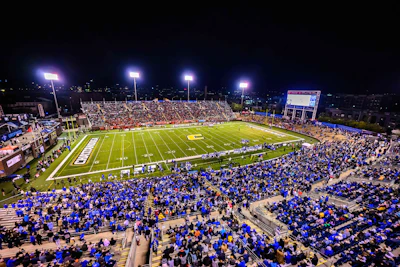
Today, fan experience is just as — if not more — important than the athlete experience at any given stadium, and a high-quality sound system often is the first priority for a facility seeking to elevate its sporting events. When Brian Wright, executive director of the Stadium Corporation, asked Smart Systems and Biamp to update 29-year-old Finley Stadium’s AV system last fall, he wanted to keep fan experience top of mind.
“The old system was deteriorating. We had pretty much lost bass, wireless mics stopped working well, handheld mics were going in and out,” says Wright. “It was affecting our clients and our guest experience, and what we could do in terms of providing entertainment for our fans outside of the game itself, especially in an environment where everything is all about AV and lighting and how can you make it a show. We could not do that with an inadequate sound system.”

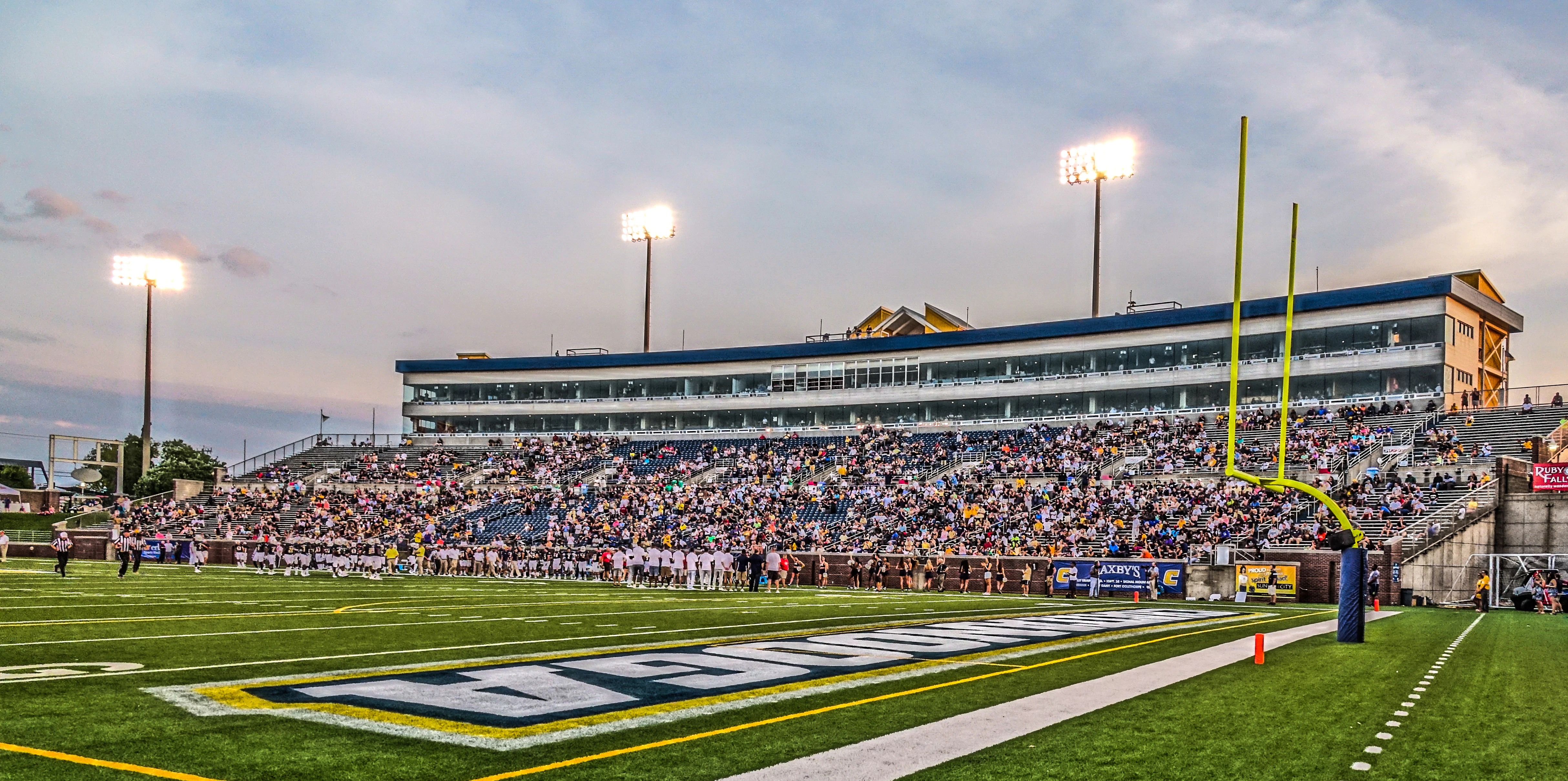
The 20,000-seat stadium, which opened in 1997, host’s the annual TSSAA state football championships, serves as home to Chattanooga FC, and even supports adult recreational pickleball at the pavilion across the property.
Throughout several decades acting as the primary venue for some of Tennessee’s biggest sporting events while welcoming 550,000 annual visitors, Finley Stadium has seen piecemeal renovations, but Wright made it his mission to reimagine the facility.
From a background of developing Mercedes-Benz Stadium in Atlanta, Wright says the upgrade of Finley’s AV setup was night and day. “Coming to an existing facility that had more aged sound and video equipment, how do you bring it up to par?”
The answer was Biamp equipment and the installation team at Smart Systems.
“Primarily what we like about Biamp is the equipment,” says Smart Systems general manager Noah Stein. “They’ve been rock solid. They stepped in and helped us with the design, and they’ve been a great partner. For as big of a project as this, it was important for us to have a manufacturer that is a good partner.”
To give Wright an idea of what was possible, Biamp invited him to tour the stadium at Georgia Southern University, where a recently installed Biamp sound system served as a comparable setup to what Finley Stadium could expect.
“I got to go see the system at Georgia Southern, which is a very comparable stadium to what we have here, and it was impressive in terms of how the sound system actually enhanced the crowd energy and brought people into the action,” Wright says. “I spent a couple hours with their audio engineer, walking around, seeing how he managed it, what his pain points were, what he would do differently. For me, those things are always beneficial.
“Our system was a detriment here. When I came back, I made it my mission to make sure we could get this project approved and get going.”
When the project did gain approval, Wright and the Smart Systems team faced a few initial challenges that they overcame with the help of Biamp’s engineers and flexible budgeting options.
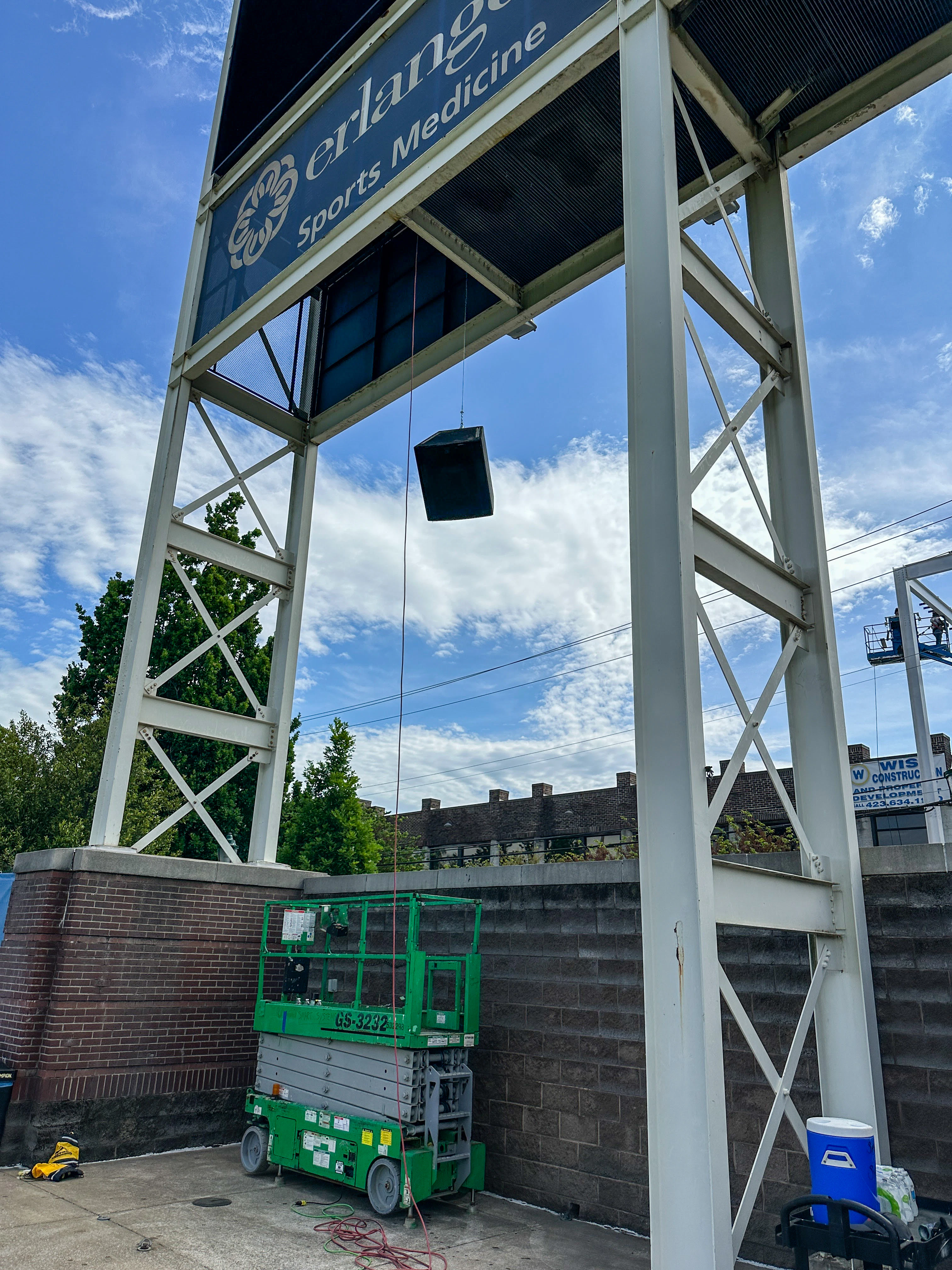
Finley Stadium’s current scoreboard couldn’t accommodate a tall loudspeaker, so Biamp recommended an LVH 906 array with beam steering capabilities to ensure full coverage of the seating area.
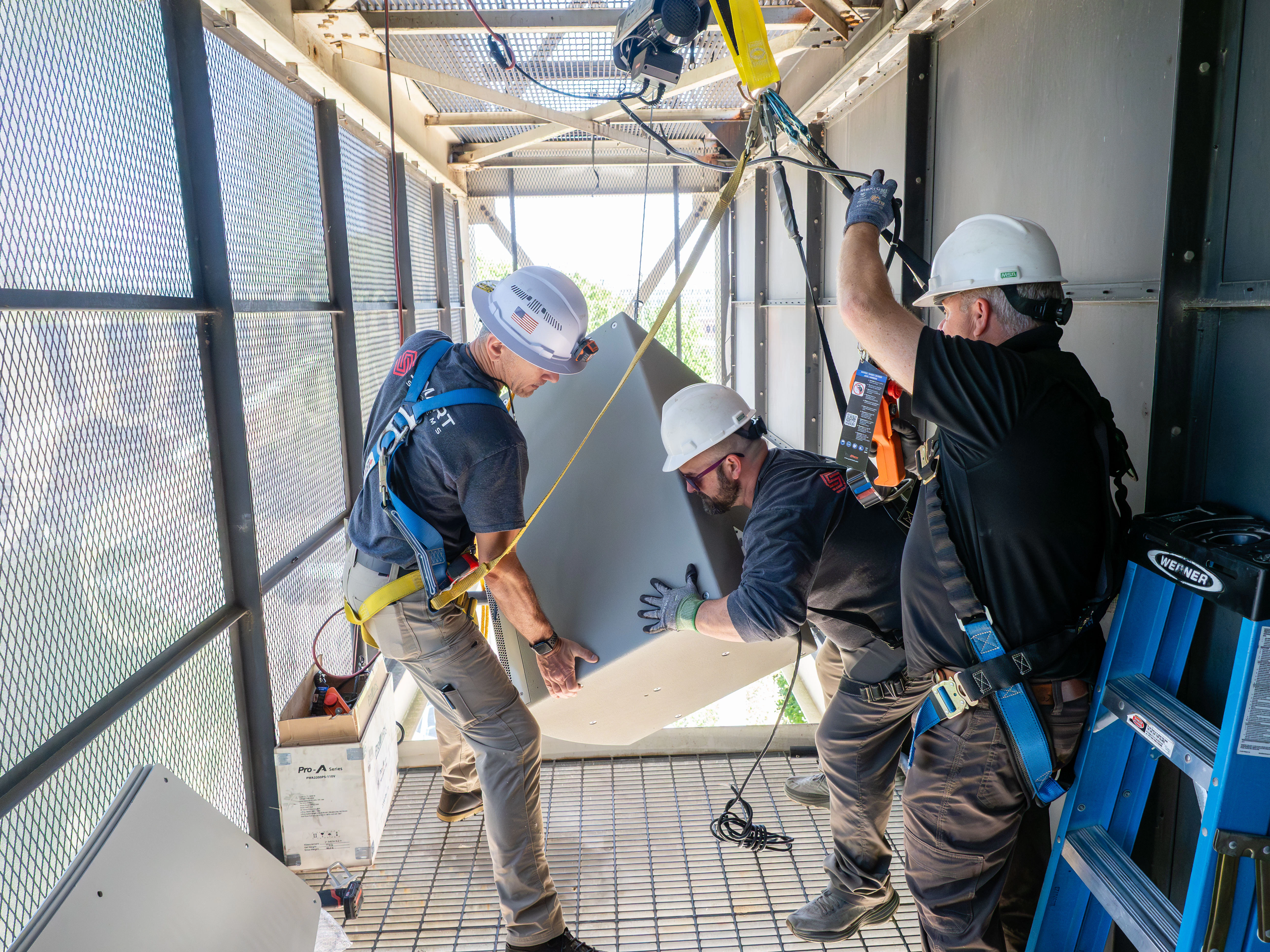
“We had two openings on the bottom of the scoreboard structure that we were able to lift and put the new speakers in,” explains Frank Herreth, sales engineer, at Smart Systems. “It took multiple trips to make sure we had the measurements right and to make sure we had the weight correct for mounting the speakers. We had to get the structural engineers for the stadium to sign off on all the additional weight that was going to be up there. It took a lot of planning and triple checking before we were able to start the installation process.”
Budget was another top consideration.
“An organization like ours does not have endless funds,” Wright says. “We had a state grant for capital improvements last year, and we allocated some of those funds toward audio improvements.”
As the team overcame these challenges, they credited Biamp’s integral involvement. Stein and Herreth note that Biamp’s engineers visited Finley Stadium multiple times and made recommendations to achieve remarkably even coverage from a system with dimensional and budgetary restrictions.
“Make sure you involve the Biamp engineers early in the process, early in the design phase. That was such a help, and it just made the entire process so much easier than figuring it out on our own,” says Stein. “They were on site multiple times before the installation even started. They were crucial to the installation.”
With the completely new audio system in place, Wright says that Finley Stadium is now poised to offer an elevated gameday experience and be competitive with other, local venues in terms of audio quality.
Says Wright of the finished product, “We have reliability for years to come.”