



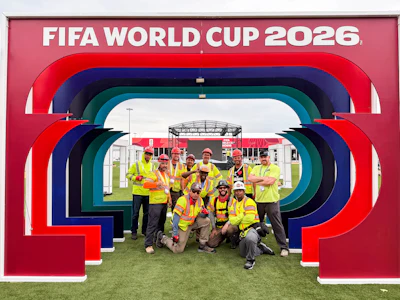
Celebrating its 40th year, Britten Inc. has evolved from banners hand-painted by its founder to a one-stop branding shop capable of tricking out the 2026 FIFA World Cup — a job that ultimately required overtime effort from all 240 employees working at the company’s manufacturing headquarters in Traverse City, Mich.
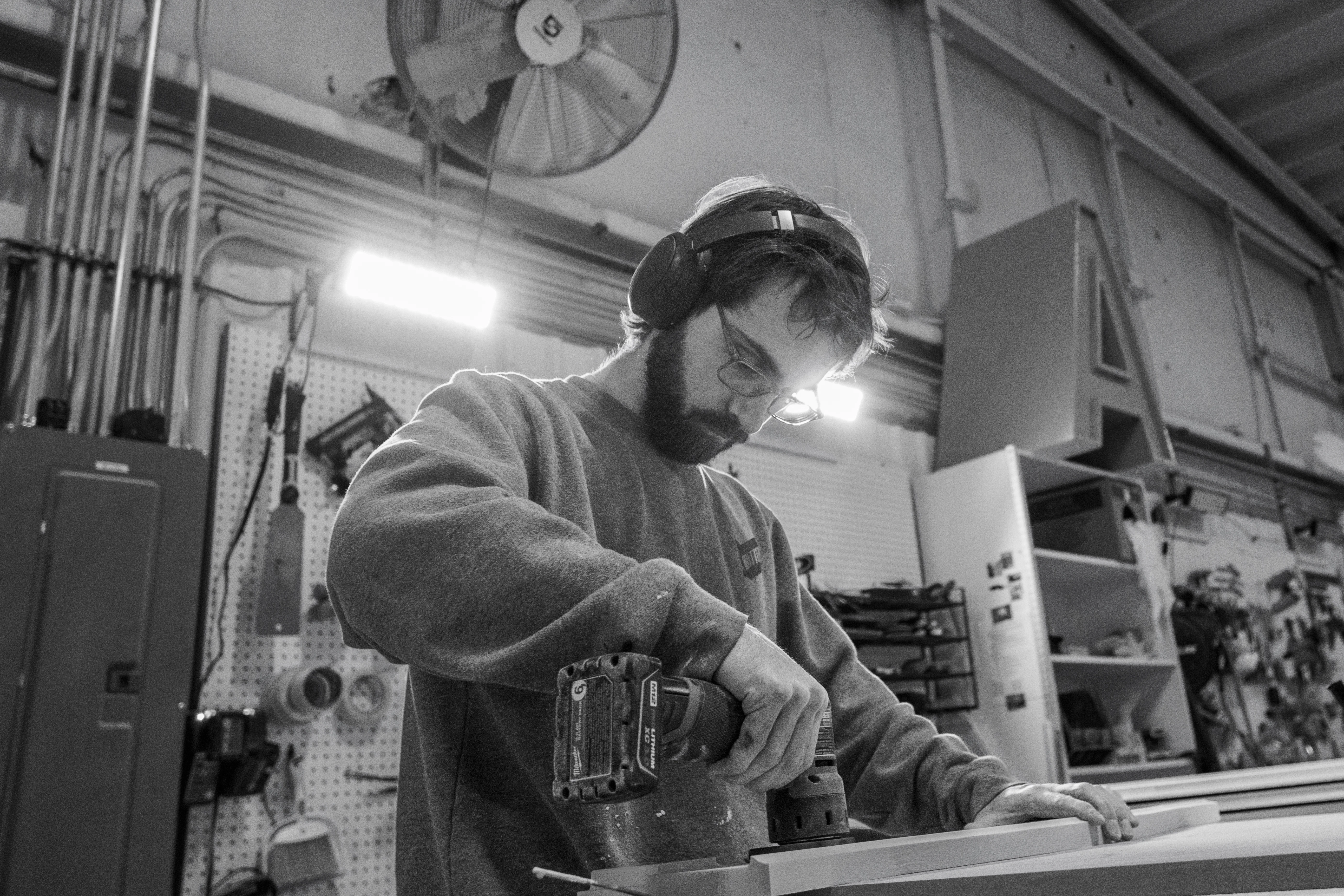
“We hadn’t played at that level,” says Paul Britten Sr., whose first taste of sports marketing came when he pieced together a billboard-sized banner out of butcher paper to celebrate the Detroit Tigers, winning $500 in contest prize money and tickets to the 1984 World Series. “We had done a lot of work on a lot of global events, but not at a World Cup level.”
Staged every four years, the World Cup is widely regarded as the largest global sporting event of all — outshining even the Olympic Games in terms of television audience and fan interest. Britten received the bid to brand FIFA volunteer centers in all 16 North American host cities 15 months in advance of the tournament’s first match in June. Britten representatives made site visits roughly eight months out, but no amount of orientation could fully prepare the even fabrication company for every challenge that would follow.
[Britten’s design team] is dialed in and clocking. Everything was clearly presented. The design was thoughtful, concise, consistent, has style, flow, and a rhythm within the space – matches our guidelines! I wish we were introduced sooner...
-VP of Design at On Location
Once in the FIFA fold, Britten would take on the added responsibility of working through hospitality agency On Location to brand VIP spaces within the actual competition venues, many of which served as home to college and professional teams. FIFA’s established windows of access to those facilities allowed mere weeks to fabricate and install customized brand elements, including frame-supported structures, in each unique space.
“The actual load-in window in terms of getting in there, getting it unloaded and installed, and getting client approval was roughly two weeks prior to the first match. It was tight,” says Britten COO Ryan Kennedy, who oversaw the even fabrication company’s network of 16 site managers, including his role as point person in Mexico City. “And then one of the things we didn’t find out until pretty close to the tournament was the fact that they do a security bomb sweep 48 hours before the match. So, you actually have match day minus two, so basically three days before the first match is when you have to be done.”
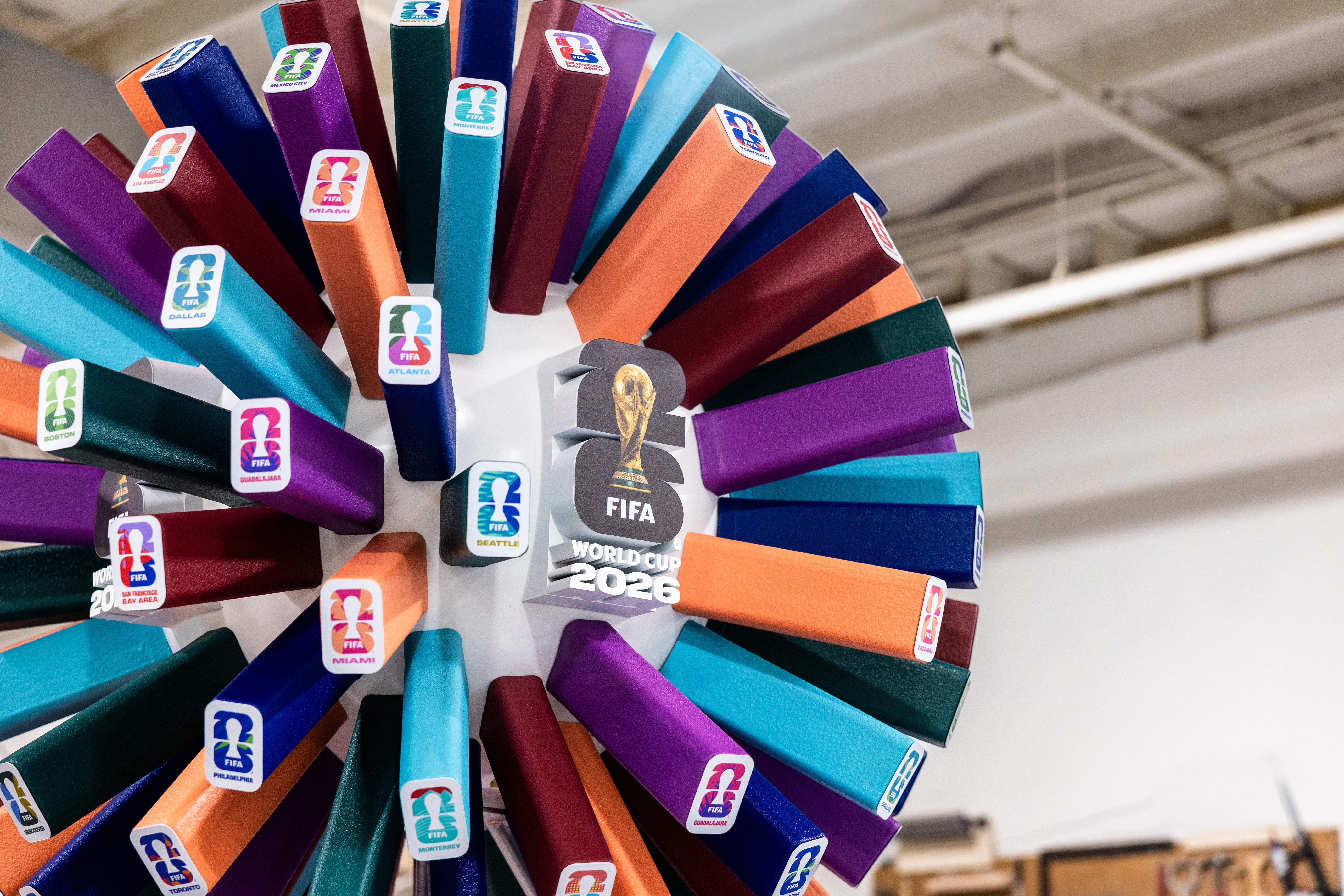
All branding had to meet FIFA’s stringent standards in terms of its marks and color matches before manufacturing could even begin, with photos shared through a lengthy email chain or samples physically sent to Zurich, Switzerland, for FIFA’s final approval.
“Your team's amazing designs and the gorgeous kits you produced have brought the Volunteer Centre to life. We are so grateful.”
-FIFA Volunteer Management Employee
“The start date of the event doesn’t change, but you can’t really start until you have the artwork,” Britten says. “We were eager to get started and move into production. With more than a million square feet of printing, the scale was significant, and keeping things moving required close coordination as final approvals came through.”
“When you have an event like the World Cup, there were some projects that took 15 months of planning, and those were great, and then there were some projects that happened from one day to the next, and in a matter of weeks you need to work through art approval, fabrication, design, logistics and loading — all of that execution,” says Britten director of field services Kristi Radakovic, who served as senior project manager for the event fabrication company's installations team during the World Cup. Hospitality spaces catered to a different end user than the volunteer centers, adding another layer of pressure to the process, according to Radakovic. “At the end of the day, if the president of FIFA comes on-site — doesn’t matter who’s approved it — if he doesn’t like it, then we’re scrambling to get something on-site tomorrow.”
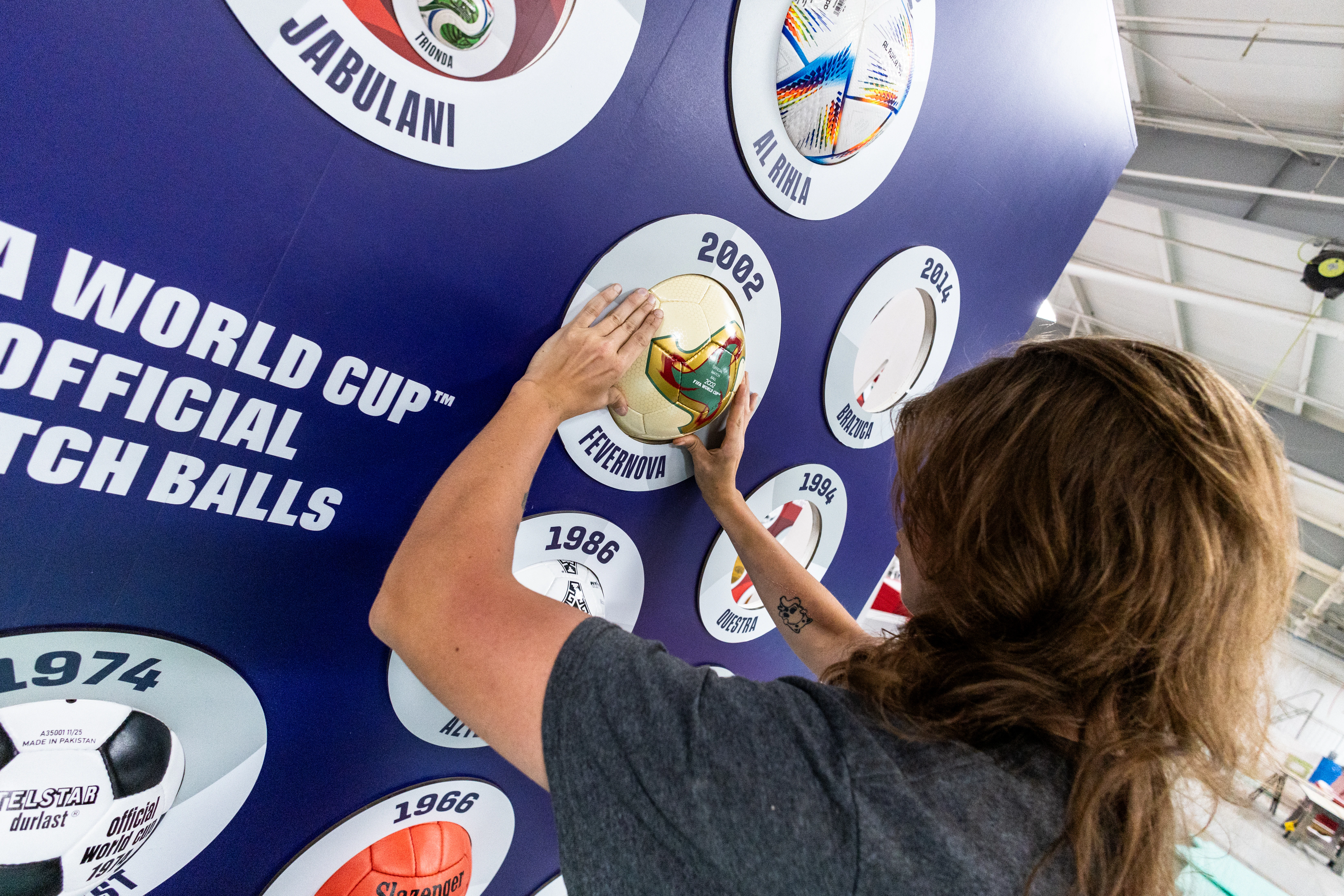
More than 100 dedicated truckloads delivered Britten product, including 200-plus scenic elements, to 94 installations across the tournament footprint — mostly without a glitch. “In Guadalajara, we had two trucks stuck at the border for five days, which was cutting into our install schedule,” Kennedy says. “Our Britten Mexico team was pulling in additional subcontractors, but we had to double our Guadalajara team just because of lost time at the border for customs inspection.”
According to Britten, the single biggest job in his company’s history amounted to between $15 million and $16 million in revenue, and it took an all-hands-on-deck mentality to pull it off. “We had to open Britten Mexico, we opened Britten Canada, because FIFA required that they pay in the common currency of those countries, and we abide by all tax laws. So, we have two separate companies that we established,” he says. “At Britten Mexico, they were able to find and hire over 150 installers and manage them in Monterrey, Guadalajara and Mexico City, and they did it very successfully.”
Britten Team – …..WOW, WOW, WOW!! Huge congratulations to you and your teams for this!...It truly looks FANTASTIC!!! I hope your team is proud, we sure are seeing these [photos]. With NYNJ being the first Volunteer Center to go operational, and THIS is the first impression our volunteers are going to see, it sets the tone for the amazing things to come.
-FIFA Volunteer Management Employee
Back in Traverse City, success came at a price — one the founder was more than willing to pay. “I’m proud of this,” Britten says. “We had five weeks to produce a huge amount of work. We had a company meeting, and we said to every single employee, ‘For the next six weeks, your pay just went up five bucks an hour. No matter what you make at all different levels in the company. This is a surge. We’re all in it together. We have to execute.’ And we did, and I’m very proud of it. It was a way for me, as the owner, to share the wealth with those who wanted to put in the energy and time. We had some employees who worked 70 hours a week and really crushed it.”
That pride translates to a companywide mentality that if Britten-produced branding can cover a World Cup, the company can do just about anything. “We were very honored to be doing that work, and the whole shop loved it,” Britten says. “It was very exciting to think that we’re on a global stage producing at that level. It was good work. It was profitable work. And we would certainly do it again.”