





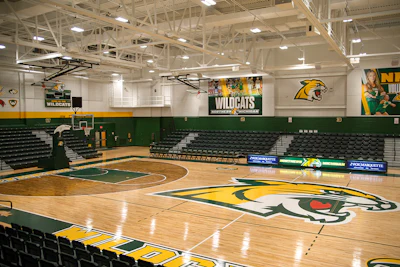
Up in Michigan’s Upper Peninsula sits Marquette, home to Northern Michigan University (NMU). For years, the school’s basketball program relied on a setup that was as demanding as it was functional. The program utilized the hockey arena as a multi-purpose space, floating a court over the arena’s ice surface when games were in season.
The system worked, but it came at a cost. Set up and teardown typically took eight hours or more. Each section of flooring was individually numbered to be assembled in exact sequence for the system to lock together properly. Once games concluded, the entire process reversed, with every piece disassembled, sorted, and stored just as meticulously. When hockey and basketball schedules overlapped, facility staff routinely faced long nights and tight turnarounds.
Once the court was installed, another issue became clear. The arena, designed primarily for hockey, created too much distance between the court and the crowd. A wide perimeter surrounded the playing surface separated student-athletes from spectators. The result was a game-day atmosphere that felt diluted. Crowd noise lost its impact, arriving on the court quieter and more distant than intended. For players and fans alike, the connection that fuels competitive energy simply wasn’t there.
When the time came to renovate, NMU’s facility team took a step back and reassessed. They focused on two core challenges: creating a more engaging, energetic environment for basketball, and reducing the labor and time required for court conversion. The solution was both practical and strategic.
Rather than continuing to adapt the hockey arena, NMU repurposed a smaller volleyball venue, Vandament Arena, into a multi-purpose space capable of also hosting basketball. The goal was to create a gymnasium-like setting that naturally brought fans closer to the action while significantly easing operational demands. However, this shift introduced a new challenge: how to deliver a more intimate atmosphere without sacrificing the expectations of a premium collegiate experience.
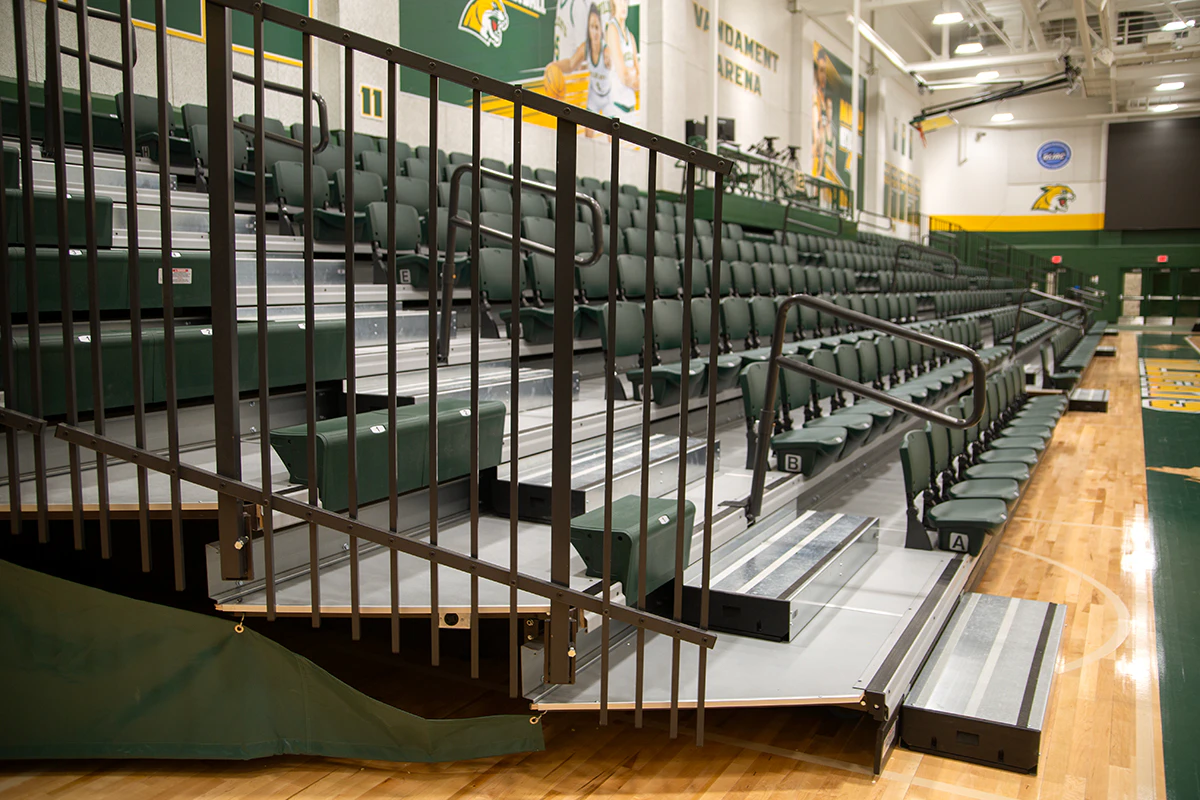
The answer came through a layered seating strategy. Interkal partnered with NMU to design a solution that balanced capacity, comfort, and visual impact. Traditional bleacher stacks were outfitted with EXCEL Seat Modules, providing flexible seating for students and general admission attendees. These areas preserved the accessibility and energy typically associated with college crowds.
Along the sidelines, the experience shifted. Wide deck platforms supported POLARIS Multi-Purpose seating with integrated ComfoBack backrests, offering enhanced comfort and ergonomic support. This combination elevated the overall environment, giving spectators a more refined option while maintaining proximity to the court.
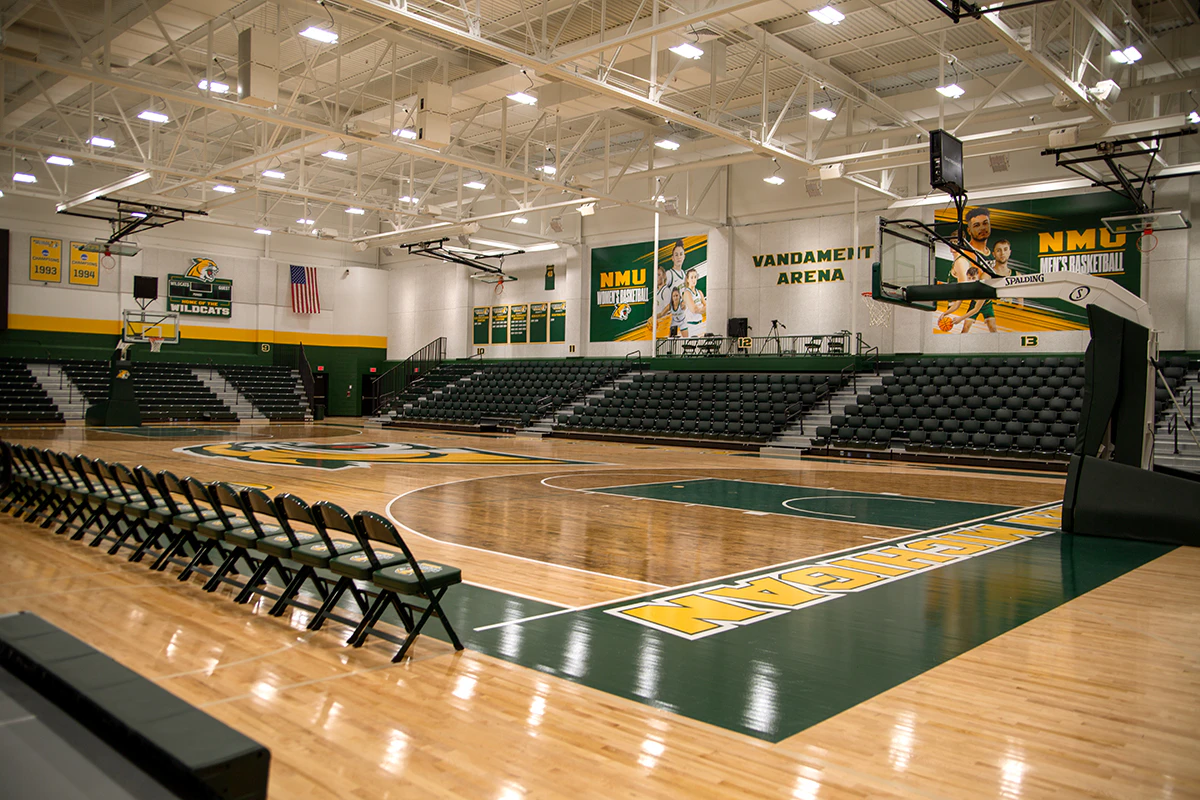
“Having the seat backs gives more of a stadium feel, but there are bleachers for general admission for students,” said Brandon Sager, Associate Director of Facilities.
Design details reinforced the transformation. Seating was finished in NMU’s signature green, aligning the space with school identity. Branded vinyl end curtains enclosed the bleacher stacks, creating a clean, cohesive look that elevated the visual presentation. These elements worked together to establish a space that felt intentional, polished, and distinctly collegiate.
The impact has been immediate. With a capacity of approximately 1,400, Vandament Arena now fills to near capacity during key matchups, including rivalry games against Michigan Tech. In this tighter setting, the energy is concentrated, the noise is sharper, and the connection between players and fans is unmistakable. Athletes feed off the intensity, while spectators experience the game at a level of proximity that larger venues often cannot replicate.
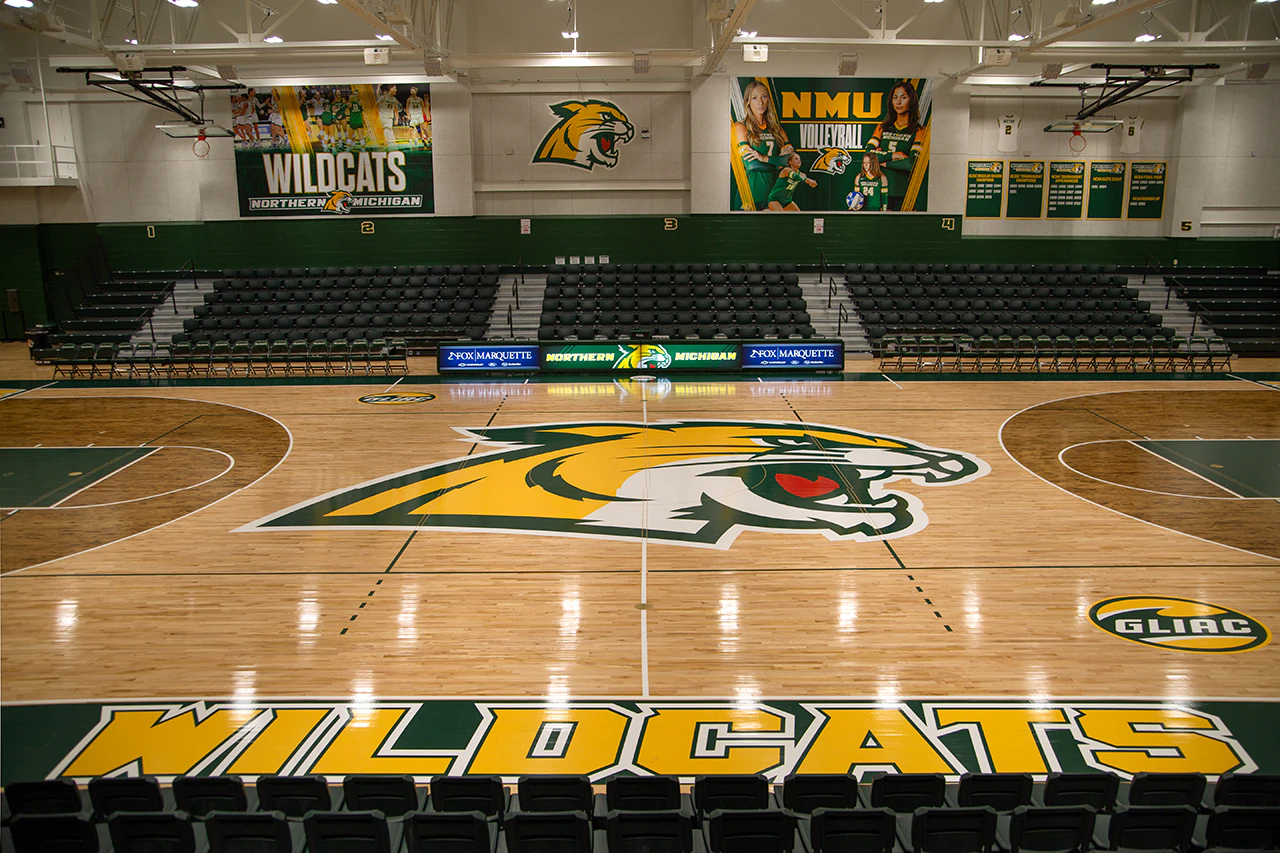
Operationally, the benefits are just as significant. By eliminating the need for a temporary court system, facility staff have dramatically reduced setup and teardown time. What was once an hours-long process is now streamlined, allowing teams to focus resources elsewhere and reducing the physical demands on staff.
By addressing the needs of athletes, fans, and facility operators alike, Northern Michigan University has redefined its game-day environment. The result is a venue that delivers both efficiency and atmosphere, a space where premium experience and practical design work hand in hand to elevate competition.
Contact info:
[email protected]
interkal.com
269-349-1521