





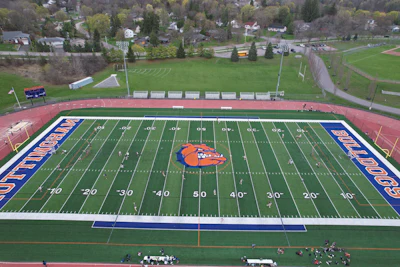
When officials from the City of Syracuse surveyed their recreation and athletics facilities last spring, they saw more shadows than light. Across outdoor fields, multipurpose surfaces and indoor gymnasiums, aging metal-halide fixtures flickered, buzzed and frequently failed, creating environments that were unevenly lit, unreliable and, in some cases, unsafe for the residents who rely on these public fields.
The consequences extended well beyond dim playing surfaces. Outdated lighting restricted field usage, strained youth sports schedules and made it harder for the city to attract tournaments. At a time when municipalities are expected to offer year-round recreational opportunities and demonstrate measurable progress toward environmental sustainability, the city’s lighting infrastructure simply could not keep pace.
Recognizing the problem was easy. Solving it was not. Like many municipalities, the city faced tight capital budgets, long approval timelines, competing political priorities, and the challenge of distributing projects equitably across neighborhoods. Upgrading even one venue required significant funding; upgrading all of them at once seemed impossible. Under the traditional model, the city would be forced into multiyear phasing or bond approvals, often delaying improvements while aging, inefficient lighting continued to drain energy, strain maintenance resources and undermine the city’s climate goals.
That changed when Tony Saraceni of NGU Sports Lighting advised city officials: DON’T BUY SPORTS LIGHTING! — a bold and surprising statement for a veteran sports lighting professional.
Saraceni instead introduced city officials to NGU's “lighting as a service” approach that would allow 10 facilities at five different venues across the city to be upgraded at once, with no upfront capital.
Performance Lighting Delivered: a new model for municipalities
Saraceni and NGU CEO Mike Lorenz, both veterans of Syracuse-based Ephesus Lighting, helped pioneer digital sports lighting in professional venues, including the first Super Bowl illuminated entirely by LED. With NGU’s innovative new Performance Lighting Delivered (PLD) program, Saraceni and Lorenz are driving another shift: giving municipalities a realistic, turnkey path to high-performance LED lighting without the financial barriers and political hurdles that typically stall such projects.
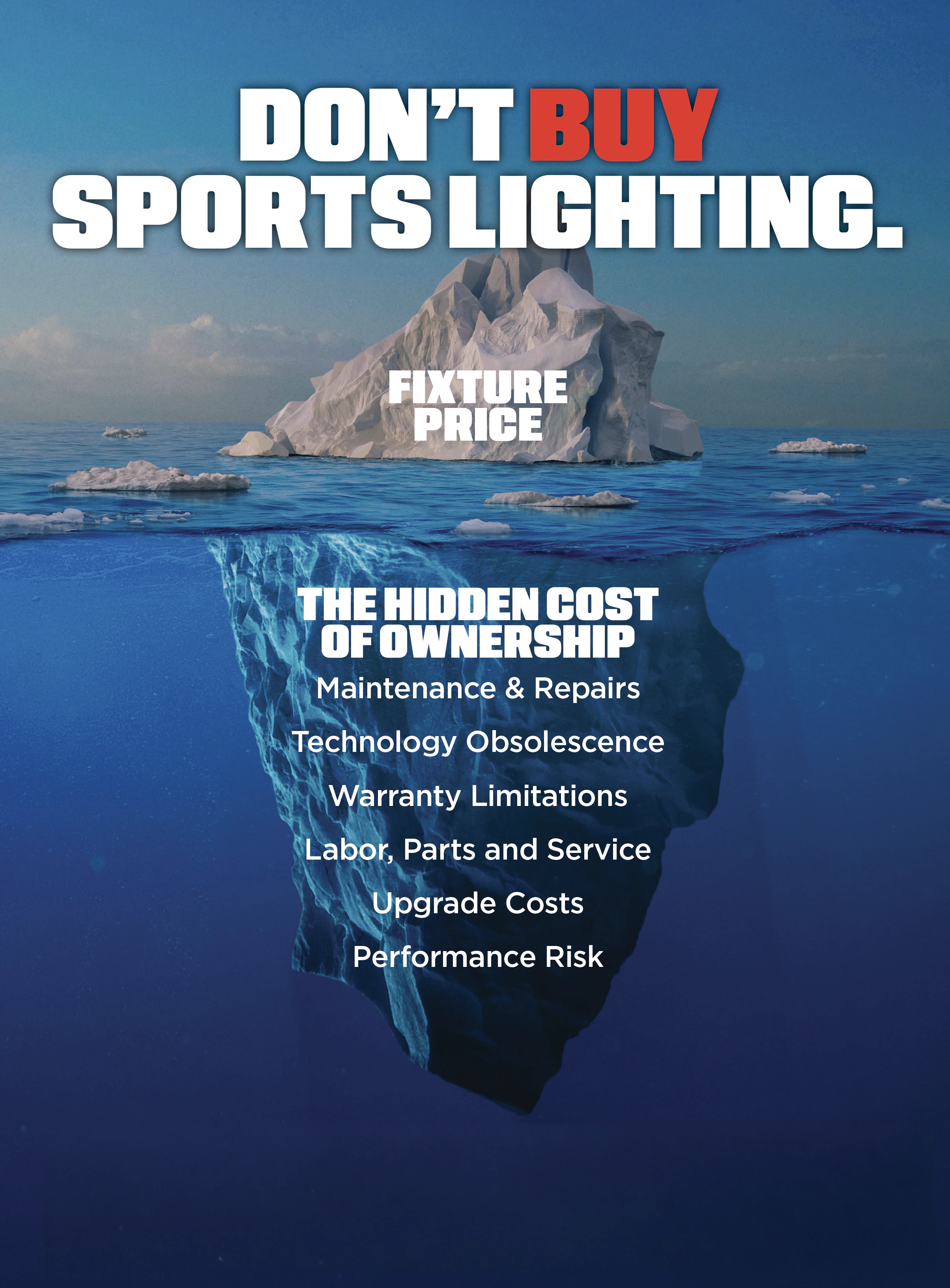
In fact, NGU is so bullish on the new model of procuring sports lighting for municipalities and colleges that the company launched an advertising campaign with the headline of DON’T BUY SPORTS LIGHTING and a dedicated website (www.dontbuysportslighting.com) explaining the new concept.
This new model converts what would have been a major capital project into a manageable operational expense and most importantly eliminating the need for bond votes, grant approvals or multiyear phased construction. It also allows cities to scale immediately. Under PLD, NGU:
- Owns the lighting system and all components
- Maintains and repairs every element
- Monitors lighting performance to ensure guaranteed lighting levels and efficiency
- Municipalities, in turn, buy the light, not the fixtures.
“For years municipalities have told us the same thing: they want to move to LED lighting, but the capital funding process keeps getting in the way," Lorenz says. "With this new model we’ve eliminated that roadblock and turned capital-intensive lighting projects into a single, predictable monthly expense.”
Transforming Syracuse facilities in just eight weeks
Using the PLD model, NGU delivered a complete lighting modernization across 10 indoor and outdoor school sports venues located at five sites around the city, all within an eight-week construction window. Despite the high year-round usage of the high school sports venues, NGU efficiently coordinated installation schedules, minimized disruptions and completed the project on a timeline that would have been impossible under traditional funding and construction models.
Each installation featured state-of-the-art digital lighting technology, wireless controls and adjustable lighting scenes that allow city staff to tailor brightness for practices, games, large events or community programming — dramatically expanding how each facility can be used while minimizing unnecessary energy consumption. The impact was immediate:
- 10 sports fields and gymnasiums at five different schools simultaneously upgraded over the summer
- 173,000 kg of annual CO₂ reduction, significantly lowering municipal utility costs and directly supporting sustainability goals
- Zero maintenance responsibility for city personnel

Lighting the future of community recreation
For Syracuse, the modernization showed what is possible when a municipality removes financial barriers and embraces a service-based model. Instead of navigating years of capital planning and phasing, the city now enjoys a fully modernized inventory of recreation lighting, measurable sustainability gains and a predictable monthly operating cost with no ownership burden.
“Our mission is simple,” Lorenz says. “Every community should have access to world-class lighting without the burden of ownership. With this new model, we take on all the risk so our clients can simply enjoy perfect light every day.”
To learn more, visit www.DontBuySportsLighting.com or contact Tony Saraceni (315-800-3208, [email protected])