





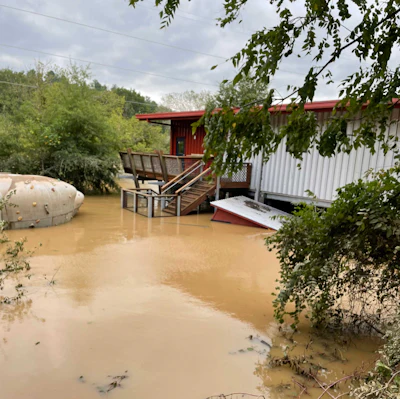
When Hurricane Helene swept through Asheville, North Carolina, in September 2024, Cultivate Climbing suddenly faced the kind of facility crisis few operators ever expect to encounter.
Catastrophic flooding destroyed the company’s existing climbing gym and severely damaged a second location that was under development. In a matter of days, Cultivate went from planning its next stage of growth to figuring out how to keep its staff employed, maintain its membership community and rebuild its business.
What followed offers a case study in how recreation operators, manufacturers and community partners can respond when a capital project encounters circumstances far beyond the original plan.
A Project Interrupted
Before the hurricane, Cultivate was preparing to open Foundy, a new bouldering facility in Asheville’s River Arts District. Walltopia had already designed and manufactured the climbing walls for the project, and the shipment was making its way to the United States.
A port strike initially delayed delivery, frustrating the Cultivate team. In retrospect, that delay proved remarkably fortunate. The climbing walls remained safely aboard a ship while Hurricane Helene devastated Asheville. Had they arrived only days earlier, the climbing walls and flooring likely would have been inside the flooded building.
Once the extent of the damage became clear, the project could no longer follow its original schedule.
Walltopia worked with Cultivate to change course. The shipment was redirected, the climbing wall system was stored until the project could move forward again, and logistics were reorganized around Cultivate’s recovery rather than the original construction timeline.
For Walltopia, that flexibility reflects an important part of delivering major projects: the relationship cannot pause when equipment leaves the factory, even if the product is in the hands of a third-party.
“We don’t just build gyms. We help get them open,” said Walltopia Project Manager Annika Zwirn. “Our commitment is to the partnership, not just the project.”
Facility Resilience Means More Than the Building
Helene demonstrated how quickly assumptions about a facility can change.
Cultivate’s original riverside gym had occupied its location since 2015 and incorporated concrete construction intended to protect the building from flooding. The storm overwhelmed those protections. According to Cultivate, the French Broad River rose roughly 25 feet above its normal level, leaving approximately 21 feet of water inside the facility. The Foundy project was also heavily damaged despite being located away from the river in an area without a recent history of significant flooding.
For athletic and recreation facility operators, the experience reinforces a broader lesson: resilience planning increasingly extends beyond structural design.
Insurance coverage, equipment logistics, construction contracts, supply chains, temporary operating locations and vendor relationships can all become critical components of a disaster recovery plan.
Cultivate did not simply need replacement space. It needed a way to maintain its organization while rebuilding.
Maintaining Operations During Recovery
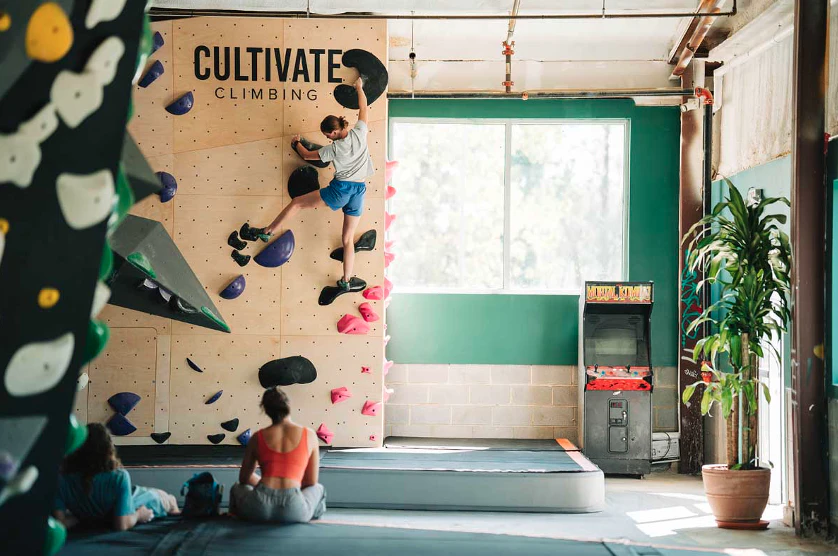
Within approximately two months of the storm, Cultivate opened The Bunker, a temporary training and fitness facility connected to a coworking space.
The concept began as a way to give members somewhere to train and, equally important, to keep employees working.
The facility combines bouldering and adjustable climbing training boards with strength equipment, cardio, yoga, sauna and cold-plunge amenities. As demand grew, The Bunker expanded to approximately 8,000 square feet.
That approach illustrates a useful strategy for recreation operators facing extended closures: maintaining engagement does not always require immediately recreating the original facility.
A smaller footprint with complementary fitness and wellness amenities can preserve staff, membership relationships and organizational momentum while a larger capital project moves forward.
Adaptive Reuse Creates a New Opportunity
Rather than simply reconstruct what had been lost, Cultivate used the recovery to reconsider what its facilities could become.
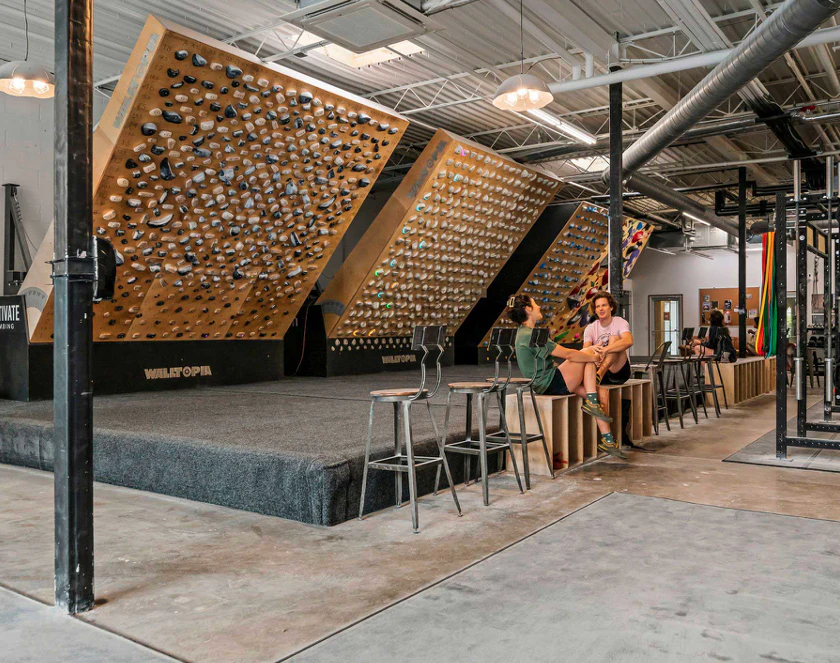
Foundy occupies a former indoor skate park near downtown Asheville. The 13,000-square-foot facility uses the existing building as the framework for a purpose-built bouldering environment constructed with Walltopia climbing walls.
The adaptive-reuse approach is increasingly relevant to athletic facility development. Former warehouses, retail properties, industrial buildings and other large-volume spaces can often provide the clear heights and open floorplates needed for recreation uses while simultaneously revitalizing underutilized real estate.
For climbing facilities specifically, the building shell and climbing wall system can work together to create an entirely new spatial experience without requiring ground-up construction.
Cultivate has carried that strategy into its next project as well.
A planned approximately 20,000-square-foot facility at Highland Station will occupy part of one of Asheville’s former brewery campuses. Walltopia designed the climbing environment to include extensive rope climbing terrain, a lead climbing area, a dramatic central arch, bouldering and dedicated children’s climbing space.
The broader campus already includes volleyball, disc golf and outdoor entertainment, placing climbing within a larger recreation destination.
From One Facility to a Recreation Network
Perhaps the most notable part of Cultivate’s recovery is that rebuilding did not mean returning to its previous operating model.
Before the hurricane, Cultivate operated one established gym and was developing a second.
Its emerging model includes three distinct facilities serving different purposes: The Bunker as a training and fitness destination, Foundy as a dedicated bouldering facility and Highland Station as a larger full-service climbing gym centered around rope climbing.
Together, the facilities allow Cultivate to distribute programming across multiple locations while serving a broader spectrum of users.
It is a model familiar to the wider athletic facility market. Rather than asking a single building to accommodate every activity, operators can develop complementary facilities that serve different audiences while functioning under one brand.
The Value of the Right Project Partner
Major athletic facilities are complex capital projects even when everything goes according to plan.
Design development, engineering, manufacturing, freight, construction sequencing and installation all have to align with the operator’s opening schedule. When unexpected events intervene, the ability of project partners to adapt can become just as important as the product they deliver.
For Cultivate, Walltopia’s role changed with the circumstances. The company went from climbing wall designer and manufacturer to logistics partner, storage coordinator and ultimately a participant in the organization’s recovery and expansion.
Today, the result is larger than the project originally envisioned.
Cultivate has transformed an extraordinary disruption into an opportunity to rethink its facilities, expand its programming and create multiple destinations for Asheville’s climbing and fitness community.
For operators developing athletic and recreation facilities, the lesson is straightforward: buildings matter, equipment matters and design matters. But when circumstances change, having project partners capable of adapting with you can matter just as much.
Partner with Walltopia and reach out to [email protected] to get started.