





Climbing walls used to live almost exclusively inside dedicated climbing gyms. Today, they are appearing in university recreation centers, municipal facilities, stadiums, and adventure parks. From Walltopia’s perspective as a global climbing wall manufacturer, the shift is unmistakable. Recreation spaces are evolving, and climbing is increasingly at the center of that change.
Part of the appeal is simple. Climbing uses space differently. Instead of relying solely on floor area, it activates vertical surfaces and transforms them into dynamic spaces. For facilities trying to maximize every square foot, this ability to build upward is powerful.
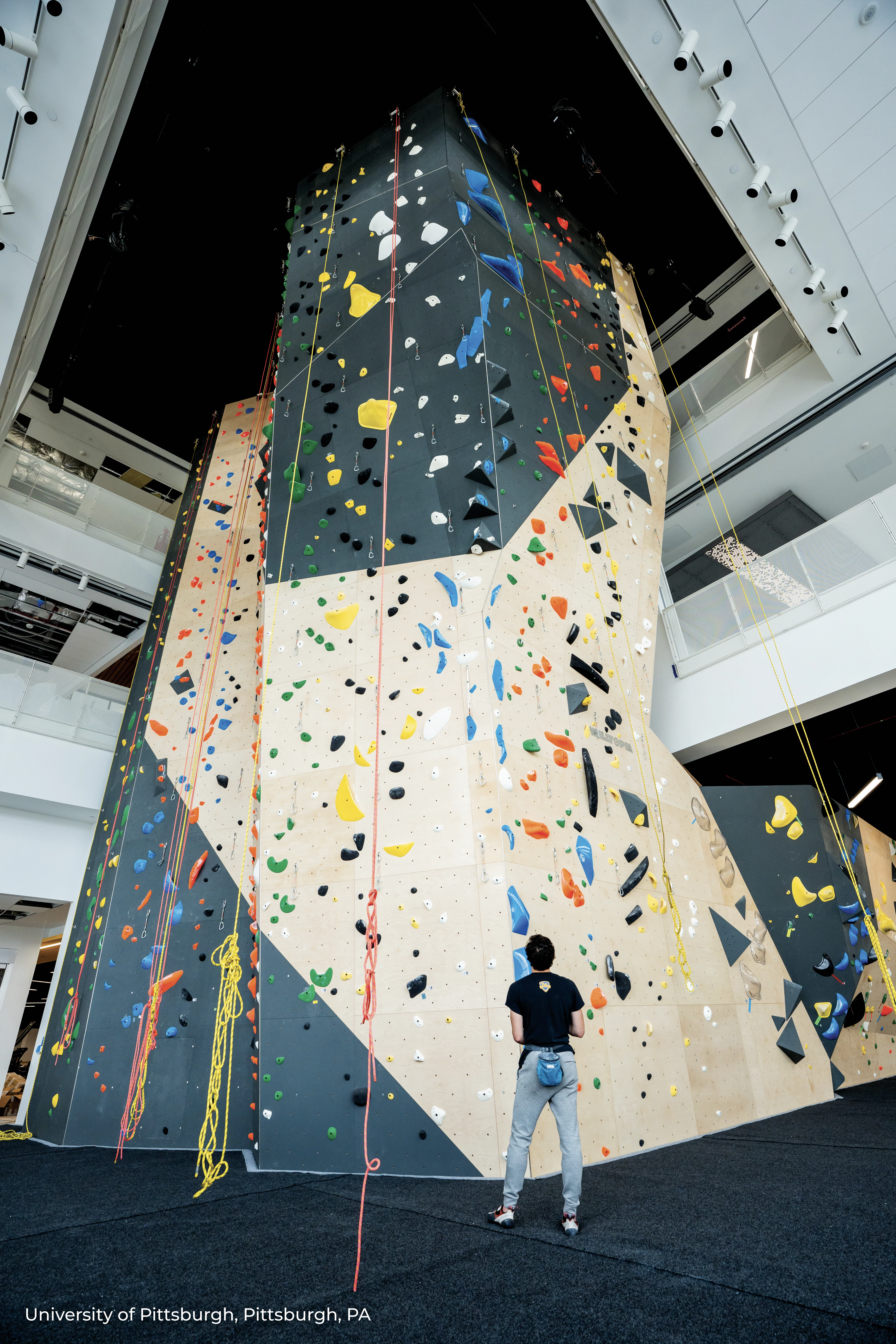
A well-designed climbing wall also creates energy within a building. Unlike much fitness equipment, it is both functional infrastructure and visual architecture. Visitors often notice the climbing area immediately when they enter a recreation center. People stop to watch, kids ask questions, and before long someone who came in to use the treadmill decides to give climbing a try.
The Olympic Effect
Climbing’s debut in the Olympics introduced the sport to a much wider audience. Events like speed climbing, where athletes race head-to-head up identical 15-meter walls in just a few seconds, helped showcase the sport’s athleticism and intensity.
The growth of competition climbing has also strengthened the connection between recreational facilities and the broader climbing ecosystem. Walltopia recently partnered with USA Climbing to support the development of competition infrastructure in the United States, reflecting the continued growth of the sport from grassroots participation to elite competition.
While Olympic competition formats differ from typical recreation climbing, the visibility of the sport has sparked curiosity. Facilities are seeing more people walk through the door who have watched climbing on television and want to try it themselves.
Designing for First-Time Climbers and Experts
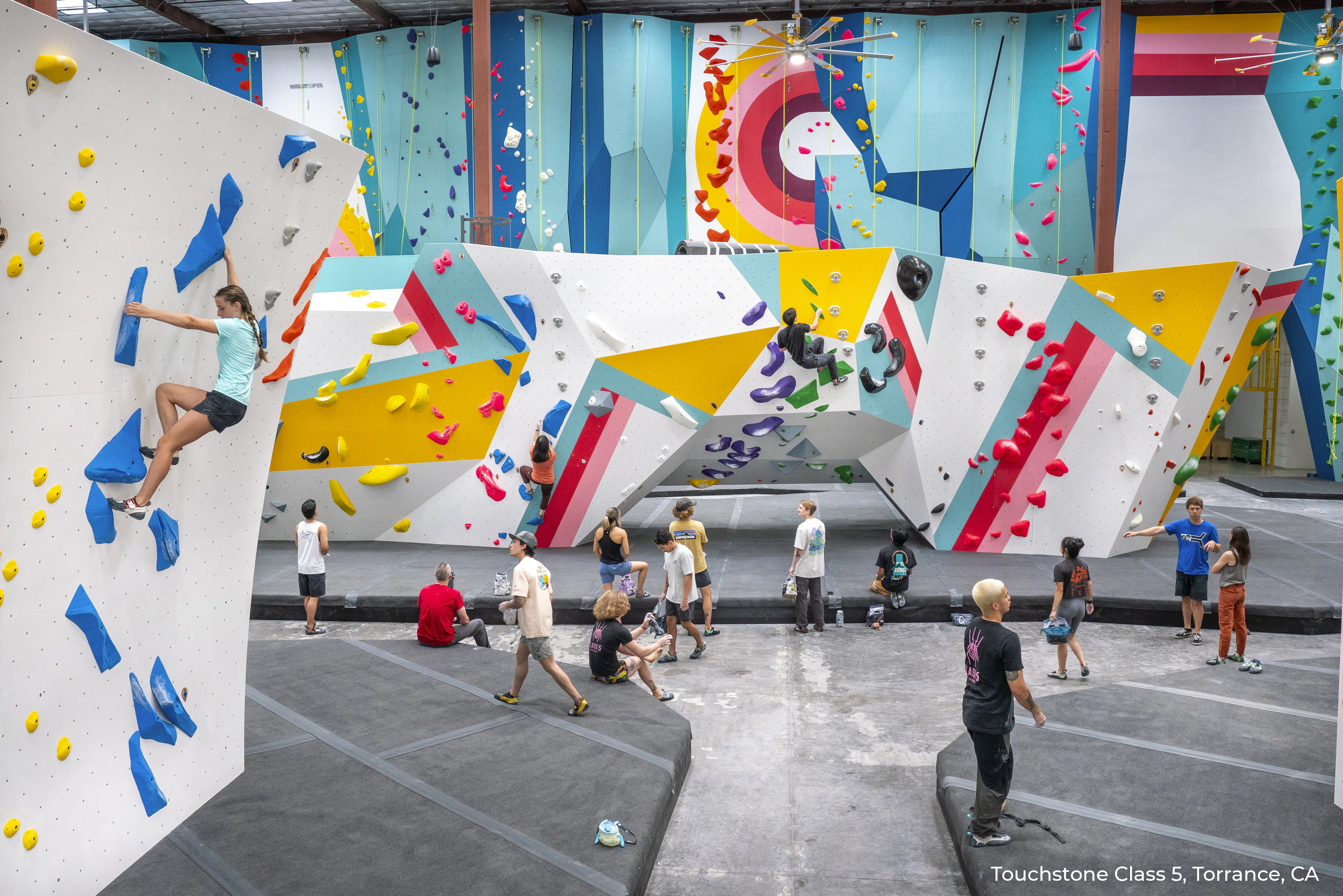
One of climbing’s strengths is that it welcomes a wide range of participants. Beginners can start on easy routes immediately, while experienced climbers can challenge themselves on steep terrain or technical problems.
At Walltopia, designing for that range is a central focus. Modern climbing areas are rarely just a single wall at one angle. Vertical sections for beginners, steeper terrain or more technical problems for experienced climbers, and bouldering areas that encourage social interaction can all exist within the same footprint.
Making the Most of Available Space
Many facilities assume climbing requires large ceilings or extensive floor space. In reality, thoughtful design can activate areas that might otherwise go unused.
Training boards are a good example. Adjustable boards such as the Quantum Board provide intense climbing workouts within a relatively small footprint. These installations allow climbers to train year-round and are particularly popular in university recreation centers and competitive training environments.
These training boards can help transform corners or underutilized spaces like unused racquetball courts into high-value activity areas. For operators trying to maximize programming within existing buildings, climbing can offer surprising flexibility.
Bringing Climbing Outdoors
Another trend Walltopia has seen is the growth of manufactured outdoor climbing areas. Municipal parks, sports complexes, and adventure facilities are increasingly integrating climbing walls into outdoor environments.
Outdoor climbing structures can serve as permanent attractions, community gathering points, or components of larger adventure parks. Because climbing walls are highly visible, they often become a focal point within outdoor recreation spaces.
For communities looking to activate public parks with something unique and engaging, climbing provides a compelling option.A Culture That Builds Community
Climbing also brings something that many traditional gym activities lack: a naturally collaborative culture. Climbers often share advice (“beta”), encourage one another, and celebrate successful attempts together.
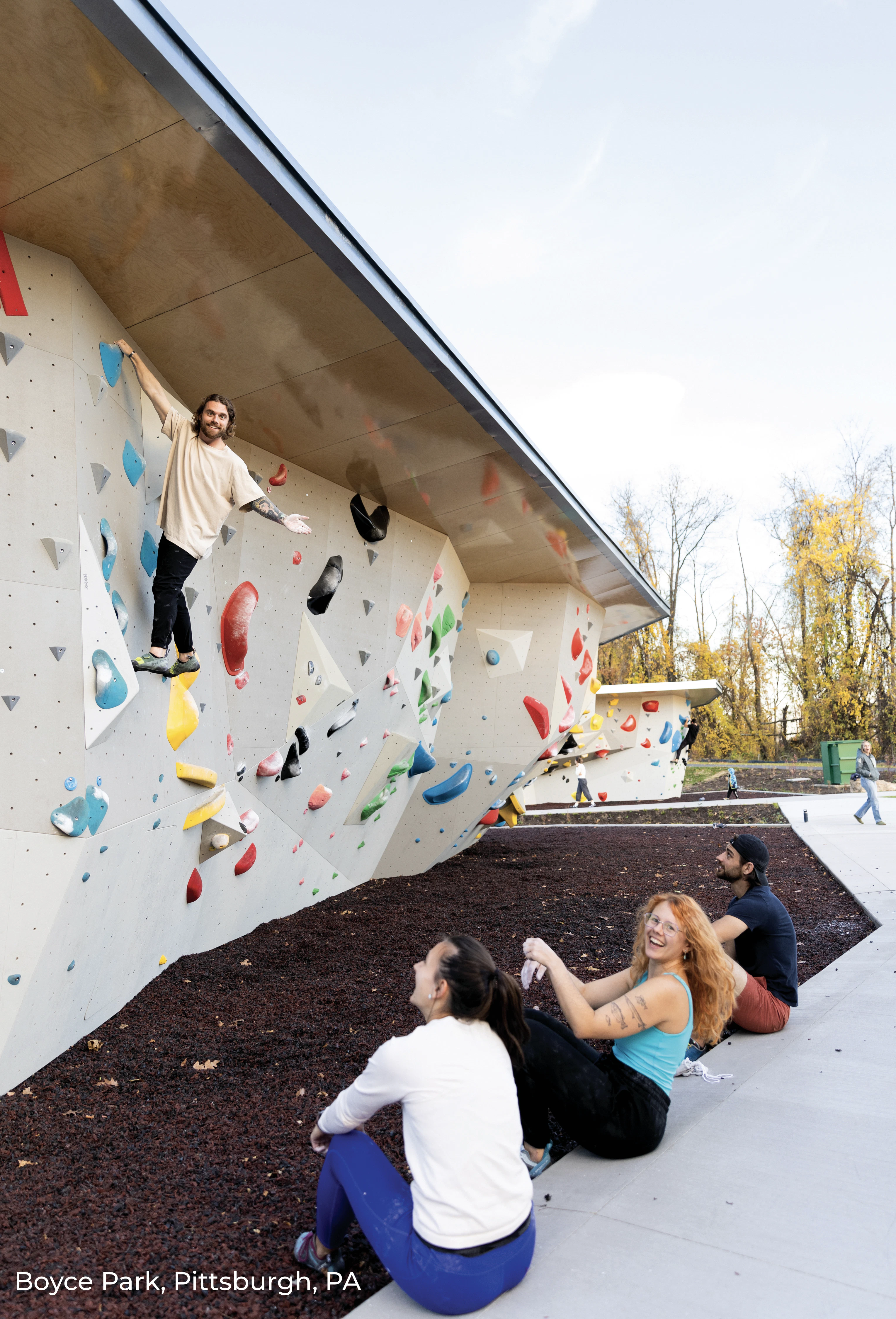
In recreation facilities, that dynamic can quickly transform a climbing area into one of the most social spaces in the building. Spectators gather to watch attempts on difficult routes, and newcomers frequently receive tips from more experienced climbers.
For operators focused on engagement and community building, this social element can be just as valuable as the athletic benefits.
Looking Up
From Olympic speed climbing to outdoor adventure structures and compact training installations, climbing continues to expand into new environments. Facilities are recognizing that a climbing wall is more than just another feature. It is a way to activate vertical space, create energy in a building, and offer an experience that appeals to a wide range of users.
What we’re seeing at Walltopia is a shift in how recreation spaces are designed. The floor is only part of the picture now. Increasingly, the conversation is about what can happen above it.
Contact Info:
Liz Pecknold, Sales Director