Lightning ranks among the top concerns raised at nearly every event-safety workshop Josh Durkee has led over the years. But when the Western Kentucky University meteorologist pushes past the initial worry to ask how organizations are actually handling it, the answers often reveal outdated habits masquerading as best practices.
Durkee’s go-to example is heat lightning and the belief that flashes on a clear night, with no accompanying thunder, pose no threat. “I have experienced it. I was at a summertime event where a severe thunderstorm was approaching,” Durkee says, noting that flashes lit the sky for 30 or 40 minutes before the storm arrived. The announcer had told the crowd it was just heat lightning and to enjoy the game, but that wasn’t the case. “Sure enough, a squall line hits,” Durkee says. “Everyone’s running for their cars.”
“Some of the things that we joke about, other people are very serious about,” says Durkee, who also consults on event weather risk and served on the task force behind the recently released Lightning Safety Guide for Sports and Special Events, published by the Cybersecurity and Infrastructure Security Agency in partnership with the National Center for Spectator Sports Safety and Security (NCS4) and the University of Southern Mississippi.
Durkee says heat lightning, which is actually lightning from a storm too far away to hear, is just one example of the many inherited habits and beliefs that the new guide is designed to retire in favor of current science, technology and proven safety procedures.
Scale the plan and the message
One of the guide’s defining features is a set of tear-away pages, calibrated separately for small and large events, that represent a deliberate rejection of a single, universal protocol. “There’s not a one-size-fits-all [protocol] for all events and venues,” Durkee says. “But at the same time, we have to have some sort of standardized guide.”
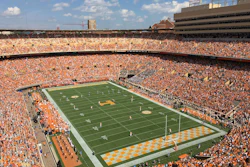
A football game in a sold-out 50,000-seat football stadium carries a fundamentally different risk profile than a baseball game attended by 200, he notes, and factors such as venue shelter, crowd demographics and attendee mobility all shape what a workable safety response looks like. The goal isn’t a lighter-weight version of the same plan for smaller venues, but rather a plan built around what any given venue can realistically execute.
That distinction points to what Durkee sees as the real driver behind a striking data point from NCS4’s supporting survey, which found that 95% of organizations reported having a lightning safety plan, but only 77% felt it adequately covered their event. The gap, he argues, comes from confusing an ideal plan with an achievable one.
“What is the best plan for 50,000 people in a football stadium when there’s lightning? Well, the best plan is to shelter 50,000 people. Is that an achievable plan? Probably not,” he says, adding that plans are often built to satisfy due diligence requirements rather than tested against whether a venue can actually pull off said plans. “There is a difference between designing what I would consider a best or an ideal plan versus one that is actually achievable. And the achievable plan is one that sets the expectation for what can be done.”
Technology has actually changed
The shift away from erroneous thinking about heat lightning isn’t just about refuting superstition, it’s about precision. Modern detection systems can now pinpoint where lightning struck, in what direction relative to a venue and track that data continuously. “Now all of us have the power to collect lightning information on a scale that was never achievable before,” Durkee says.
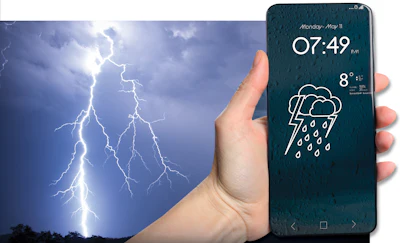
That access comes with a caveat. Most consumer weather apps draw from a small handful of underlying data providers, meaning a free app and a premium one may be pulling from similar sources, but not always with the same reliability. “If you’re buying or getting a free app, you’re making the assumption that the way they’re pulling lightning information is accurate,” he says.
Data sourced closer to federal or authoritative feeds tends to carry more confidence. The responsibility, ultimately, sits with the end user to know where their information is coming from.
That doesn’t mean small venues need enterprise-grade systems. Without endorsing any specific service, Durkee points out that lightning add-ons are available on several mainstream weather apps for as little as $10, an affordable baseline for a youth league or community facility that will never have a meteorologist on staff. Says Durkee, “That’s a good example of trying to scale to the need of the size of the event and the resources that are available to that event.”
Big footprints, twitchy weather
Durkee is careful not to reduce the issue to climate alone. Events themselves have grown more complex, he says, noting that a three-hour game has become a seven-hour experience once tailgating, concerts and other programming are added around it, expanding both the crowd and the operational window during which weather can intervene and prove disruptive or dangerous. Factor in weather patterns Durkee describes as more extreme and “light-switchy” — drought conditions changing overnight to torrential rain and flooding, as one example — and the margin for error narrows.
That growing complexity is also fueling demand for dedicated event-meteorology support, a role Durkee fills for clients ranging from festivals to marathons. Unlike a general area forecast, his work is built around a single point in time and space. “Weather apps and other styles of forecasting are not usually geared for the events, but for the areas in which the event is located,” he says.
The value in forecasting for a specific event’s date and location comes from planning before organizers arrive on site, backed by historical data on how similar events have fared in similar conditions, which beats scrambling once a forecast turns ominous.
For facility operators evaluating their own plans against the new guide, Durkee’s underlying message is less about acquiring new technology than about honesty in the planning process itself: “Build the plan a venue can actually run, not the one that only looks good on paper.”
That means treating a lightning plan the way a meteorologist treats a forecast, as something to be tested, revised and checked against what actually happened, rather than filed away once it’s written. A plan that can’t survive contact with a real event isn’t a safety net, it’s paperwork. The venues Durkee sees succeed are the ones willing to admit, in the calm of an off-season review, where their plan would break down under real conditions, and then proceed to close that gap before a storm makes the point for them.