It’s hard to believe that we’re six years removed from the COVID-19 pandemic, when community recreation centers (and plenty of other sports and recreation facilities, too) went to great extremes to keep users, visitors and employees safe. If you still have stickers on the floor designating distances of six feet, it’s time to pull them up. Same with sneeze guards and other improvised barriers at control desks and kiosks.
That said, many other hygiene-related changes implemented during the pandemic have led to improvements in design and operations that are not only desired but also expected by most recreation facility patrons. As a result, we’ve seen the emergence of cleaner facilities and stricter hygiene protocols as standard operating procedure.
Here are three examples:
• Sanitizing reminders are more ubiquitous than ever. Prior to the pandemic, the wiping down of fitness and strength equipment after using it was suggested, but that was about it. And compliance was iffy. Today, facility-wide distribution of disposable sanitizing wipes or easy access to handheld gym towels and disinfectant spray — accompanied by consistent signage — encourage all users to keep equipment clean and safe for everybody to use. At some facilities, a quick wipe-down has become as automatic as putting weights back where they belong. Common sense wins the day!
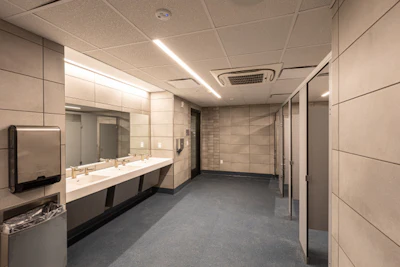
• Touchless is the way to go. When I’m in a public setting and have to physically turn on a faucet or manually activate the soap dispenser, it now feels counterintuitive. And I know I’m not alone. Based on habits ingrained during the pandemic, patrons intuitively want to touch fewer things. As a result, recreation facilities are increasingly relying on plumbing fixtures and soap dispensers that operate via motion sensors, check-in scanners triggered by barcodes on fobs or phones, and even touchless stall doors in restrooms that are now on the market.
• Use of antimicrobial surfaces pays off. The installation of antimicrobial door hardware has been a standard for us since well before the pandemic, but its broader use has certainly become more mainstream. Such hardware features specialized treatments designed to continuously kill or inhibit growth of viruses and bacteria. Common examples of antimicrobial surface materials include copper alloys and silver-treated plastics. While antimicrobials cost a bit more, they also enhance longtime viability while making a building inherently healthier.
When you think about how your facilities were operating six years ago — if they were open at all — it’s easy to conclude that everything is “back to normal now.” With hygiene matters, though, “normal” also is “better.” What other hygiene-related changes have you implemented?